Back in October in that odd and relatively short period of time for us in the North West between lockdowns and tier restrictions I visited Tate Liverpool to view the exhibition of over 200 photographs by Don McCullin: Liverpool, the north and international conflict, captured over the last 60 years. I’ve written a review of it as part of my NAM (newly accredited minister) study, and hope to get the chance to return again. The exhibition is at Tate Liverpool until May 2021 – here’s hoping galleries will open again before too long:
This is an extensive and moving exhibition of over 200 images documenting McCullin’s career in photojournalism. He is best known for photographing war, but there are other images here too. One section shows his photography on the North of England documenting life in various decades, but each represents situations that shocked McCullin, such as homelessness and struggle due to poverty. The exhibition ends with McCullin’s landscape photography taken in retirement near his Somerset home, yet there are echoes here too of darkness in the barren landscapes.
What is striking is McCullin’s ability to take photographs that graphically and horrifically in cases capture the costs to humanity of war and disaster and to present the subject of the photograph with dignity (as much as could be the case). This is evidenced in many ways, but noted in the caption of the photo of a homeless Irishman in Spitalfields, London 1970:
I tried to let their eyes meet my eyes…I want them to see I am no harm, no threat to them; I want them to see that I am looking at them through a pair of eyes that have enormous compassion and understanding.
Elsewhere he is quoted as saying of photography that it is about feeling not looking. His approach was to get close, to not be afraid to document horrors and the reality of the situation before him, in fact to be driven to go to the worst situations. His desire was to ‘bring back an image that is going to change people’s opinions’.
I injected a lot of my own thoughts into that picture, you know. I see darkness as my voice, really. I sometimes almost believe, myself, that I’m speaking for the victims and the casualties of war.[1]
The care, compassion and feeling he has for his subjects strikingly comes across; none appear to be distant images. Because of this, as well as the shocking nature of many of the images, it is an emotional walk through the gallery.
That McCullin seems ‘accustomed to dark’ in his subject matter and desire to go to the most difficult situations is fascinating, but it has meant that the world has got to know about many atrocities and injustices in a way that has challenged and upset and I’m sure caused people to change their opinions, as was his hope. However, this has not been without cost to McCullin who admits that he carried with him feelings of inadequacy and guilt, for example that he was taking a photograph when the subject really needed food or rescuing. I am sure any person witnessing atrocities of war over such a long period of time cannot walk away and be unaffected, McCullin has found some solace in retirement photographing Somerset landscapes.
An image that stood out to me was that of Jean’s hands (1980, London)[2]:
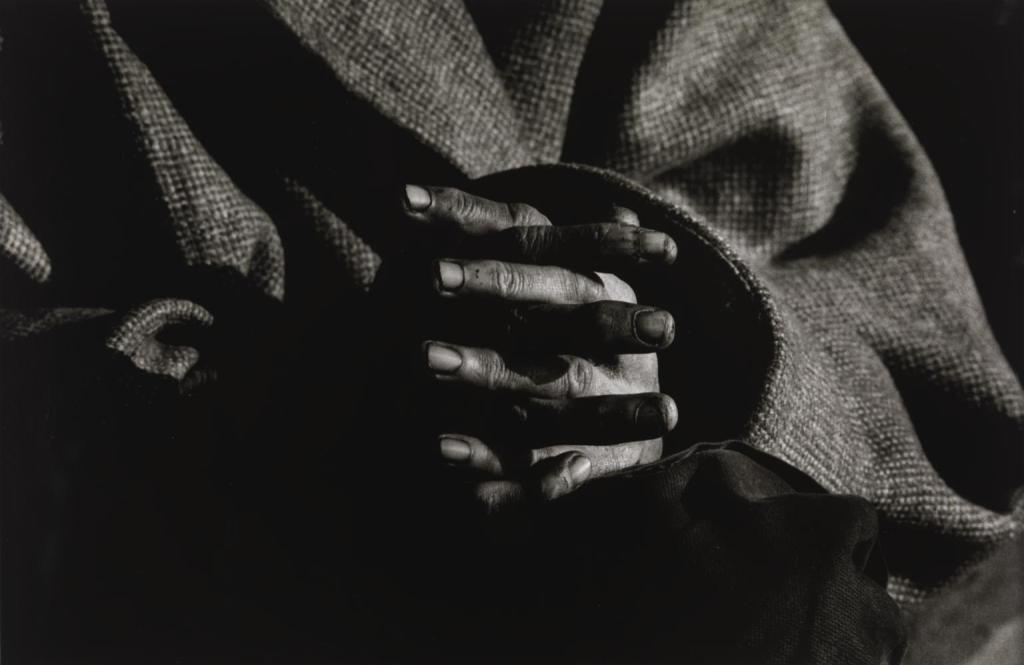
McCullin set aside journalistic objectivity to work closely with the people he photographed. He took several images of a woman called Jean, and his study of her hands is both a testimony to the harsh reality of her living conditions and to McCullin’s connection to his subjects.
The detail of light and capture of humanity of Jean as an individual comes across in the closeup image of her clasped and dirt-engrained hands. I’m reminded of the book I’ve long had on my bookshelf by Duncan Forrester: On Human Worth (2001), and not just because of the image on the front cover of a homeless man holding out his dirt engrained hands, looking directly at the camera!
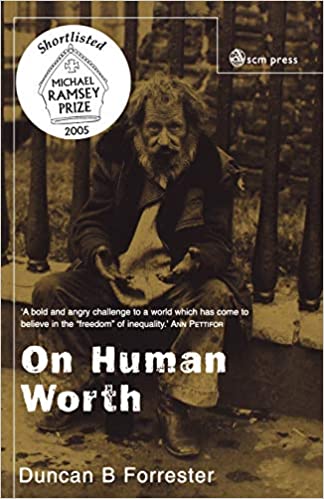
Forrester writes about equality and the study of it from a Christian perspective. On the challenges of expressing meanings behind the term equality and the study of this with people who may fall into these meanings, he writes:
I am trying to avoid using words like ‘sympathy’ or ‘compassion’ because they have been so devalued in common usage. But they both in origin mean feeling together, putting oneself in the other person’s shoes and sharing at the level of feeling in order to deepen the understanding and strengthen the will to do something to improve the situation (Forrester, 2001, p. 17).
Forrester stresses the importance of participation of people and consultation with them in seeking to address and overcome inequalities, affirming the ‘equal dignity’ of people regardless of their situation. His study of equality is framed in theology: ‘God affirms infinite worth to human beings and deals with people in an equal way’ (p. 46). McCullin makes no theological claims of his work but expresses and maintains strong values of compassion and integrity through his images and the approach he takes to taking them and sharing them with others.[3]
I leave the gallery with many thoughts:
I’m moved by the troubling images from places of war and of human suffering. I’m angry that such situations happened and are still happening and often go so long unchallenged. I’m reminded that there is still, and always will be, a need to speak out against injustice and to stand with the poor; I face my guilt for not being consistent in doing that. I’m grateful that McCullin has invested his life to going to these difficult places to bring back stories through his images. I’m touched by the beauty in and of the images, even the difficult ones, and the gift of photography McCullin has. I come away with a fresh appreciation for human life, a gift from the Creator God, who has made each of us unique and precious and longs for each to have fullness of life.
Reference
Forrester, D. B. (2001). On Human Worth. London: SCM Press.
[1] From the Transcript of video interview: Don McCullin A Silent Protest about the Futility of War https://www.tate.org.uk/art/artists/don-mccullin-7026/don-mccullin-i-hate-being-known-war-photographer
[2] https://www.tate.org.uk/art/artworks/mccullin-jeans-hands-p13203
[3] https://www.canon-europe.com/pro/stories/don-mccullin-quotes-values/
 Linda Hopkins Coaching
Leave a comment